North Stonington, CT
An excerpt from The Connecticut 169 Club
Nestled in the southeastern corner of New London County on the Rhode Island border, North Stonington spans 54 square miles — one of the largest towns by area in Connecticut. Rolling hills, dairy farms, historic villages, and iconic New England stone walls.

The History of North Stonington
North Stonington’s earliest history is deeply entwined with that of neighboring coastal Stonington, first settled by the English in 1649. As generations spread inland to cultivate the stony soil, a distinct community began to form.
- 1717 The area established its own identity as the “North Society” of Stonington’s Congregational community.
- 1807 The town officially incorporated as North Stonington, despite initial requests from residents to name it Jefferson.
During the mid-1700s the religious fervor of the “Great Awakening” swept through the region, making North Stonington a bastion for the Baptist denomination. Today a striking Greek Revival Congregational Church (built in 1846) and several early Baptist churches still grace the landscape.
From Industrial Hub to Dairy Farming
Using the power of its swift-flowing rivers, early locals established sawmills, gristmills, tanneries, ironworks, and dye houses through the late 1700s and 1800s. Historic districts like Clarks Falls, Laurel Glen, and Milltown — the village center — thrived as industrial hubs.
Before the Civil War the local economy relied heavily on cottage industries producing woolen goods, carpets, and silk. For generations the town was also famously known for raising turkeys, including a local storekeeper who shipped a massive flock on foot all the way to Washington, D.C., to grace the President’s Thanksgiving table.
Today, while Milltown’s 18th- and 19th-century buildings comprise most of the 58 town sites listed on the National Register of Historic Places, dairy farming remains a principal local industry.
Notable Places to Visit
Libraries, wineries, farms, and a hilltop view over the whole town
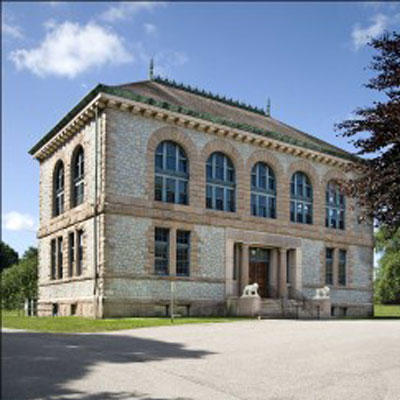
Wheeler School and Library
101 Main Street · wheelerlibrary.org
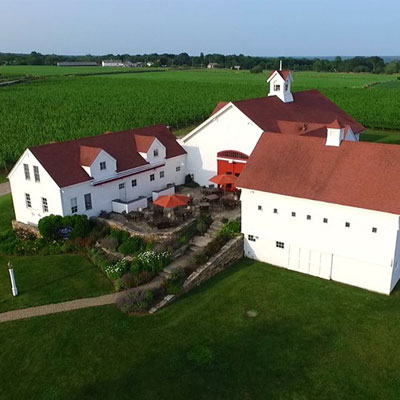
Jonathan Edwards Winery
74 Chester Main Road · jedwardswinery.com
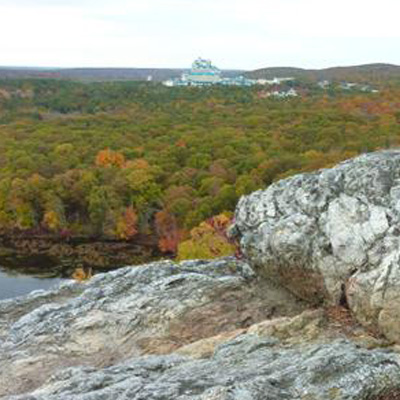
Lantern Hill
Wintechog Hill Road · elevation 491 ft
Hewitt Farm
104 acres of forests, fields, wetlands, and streams with fishing and kayaking, plus more than a mile of hiking trails including the town’s Bicentennial Trail. I-95 to Exit 92, left on Route 2 through the traffic circle for several miles.
40 Main Street, North Stonington, CT 06359 · (860) 535-2877
See map on Google Maps
Stephen Main Homestead (1781)
1 Wyassup Road, North Stonington. Headquarters for the North Stonington Historical Society and home of the A. Morgan Stewart Memorial Library.
Lantern Hill is known for fantastic views of the surrounding greenery. From Norwich take Route 2 down to Foxwoods Boulevard, then turn onto Wintechog Hill Road; parking is on the right.

From The Connecticut 169 Club
This is an excerpt from the Connecticut travel guide The Connecticut 169 Club: Your Passport & Guide to Exploring CT. It was written by local residents to encourage people to visit the beautiful 169 towns and cities in Connecticut.
Collect a stamp or signature in each town and earn the Leatherman patch when you finish.
The Travel Guide Books
Visit every town in the state, collect a stamp in each one, earn the patch